

Introduction
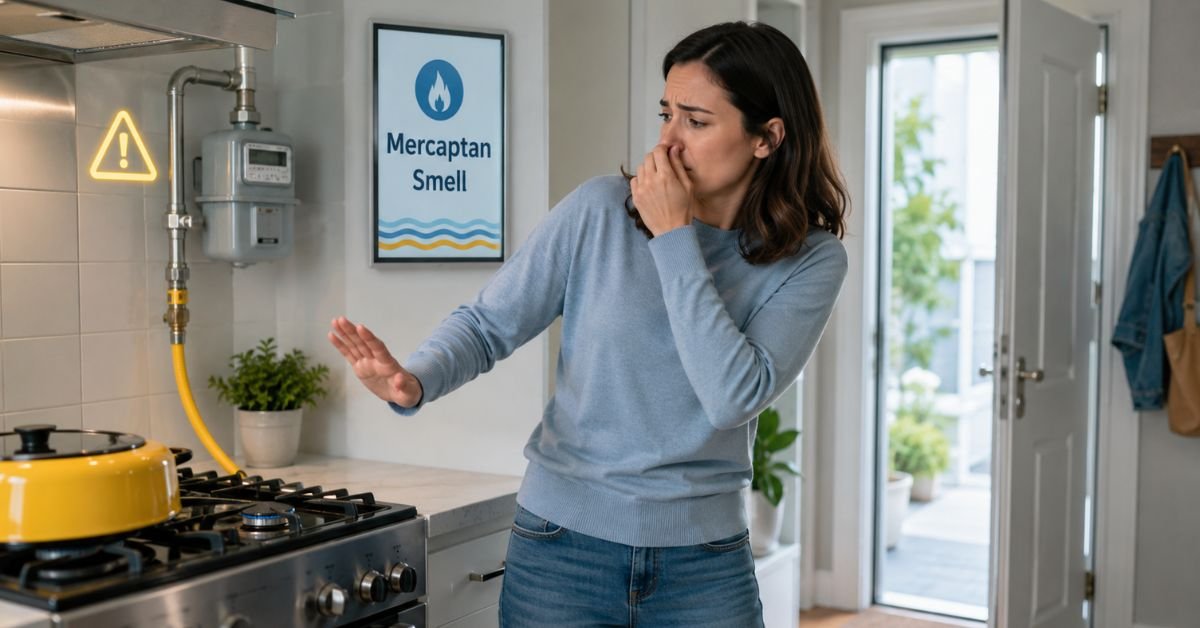
You can be stopped cold by an unexpected rotten-egg smell in a kitchen, cellar, garage, or next to a gas meter. That warning odor is often known as the mercaptan smell, and it exists for an important reason: to help people notice possible natural gas leaks before a dangerous situation grows worse.
Natural gas is used for heating, cooking, hot water, and appliances, yet the gas itself cannot normally be noticed by smell. Gas providers add a strong odorant so people can react quickly. Knowing the odor’s meaning, causes, and next steps can protect your home, school, workplace, and family.
What Is Mercaptan Smell?
Mercaptan smell is the strong sulfur-like or rotten-egg odor added to fuel gas as a warning signal. Mercaptans are members of the thiol family of compounds that include sulfur. Only a tiny amount is needed because people can notice the odor at low levels. Natural gas is mainly methane, which is colorless and odorless. Without an added odorant, a leak could go unnoticed by people nearby. The odor is not a flaw in the gas supply. It is a safety feature designed to make a possible leak easier to recognize.
Why Does Natural Gas Contain an Odorant?
Gas companies odorize distributed natural gas so a person with a normal sense of smell can recognize it before the air reaches a more dangerous level. In the United States, gas in distribution lines must be odorized or naturally detectable at one-fifth of its lower explosive limit. In daily life, the mercaptan smell works like an alarm. It does not replace professional detection equipment, but it can warn you that a cooker, heater, fitting, service line, or outdoor meter needs urgent attention.
What Does the Odor Smell Like?
The odor is meant to be difficult to ignore. People often compare it with sulfur, rotten eggs, or a skunk-like scent.
| Odor You Notice | Possible Source | Best First Response |
| Rotten eggs or sulfur near gas equipment | Added odorant and possible gas leak | Leave and report it from outside |
| Rotten eggs only from a sink drain | Dry trap or drain buildup | Check only when no leak is suspected |
| Spoiled-food odor near rubbish or a fridge | Food waste | Remove the source and clean |
| Burning odor | Appliance or wiring problem | Move away and get qualified help |
A spoiled-food odor may be present near the rubbish or fridge. Food waste: remove the source and clean. Burning odor: appliance or wiring problem Move away and seek qualified help. Never stay inside to search for the cause. If the mercaptan smell seems linked to natural gas, treat it as a safety warning.
Is the Odor Itself Dangerous?
The small amount of odorant normally added to natural gas helps people detect leaks. The greater danger is leaking fuel gas, which can collect in an enclosed area and ignite when it meets a spark or flame. The strength of the smell does not tell you exactly how much gas is present. A weak odor is not proof that a room is safe, and a strong odor is not a reason to investigate it yourself. Any unexpected mercaptan smell around gas equipment or indoors should be taken seriously.
When you smell gas, what should you do?
Do not spend time deciding whether the odor is serious enough. If you notice a mercaptan smell in a building or around gas equipment:
- Leave immediately with other people and pets.
- Do not turn lights, fans, appliances, plugs, phones, or doorbells on or off inside.
- Do not smoke, light matches, use candles, or create any flame.
- Contact local emergency services or your gas company’s emergency number from a secure outdoor position.
- Stay outside until professionals say it is safe to return.
Electrical switches and devices may create a spark. Calls should be made only after leaving the suspected area. National Grid advises people who smell gas to evacuate, avoid switches and devices, and call from outdoors.
Other Warning Signs of a Natural Gas Leak
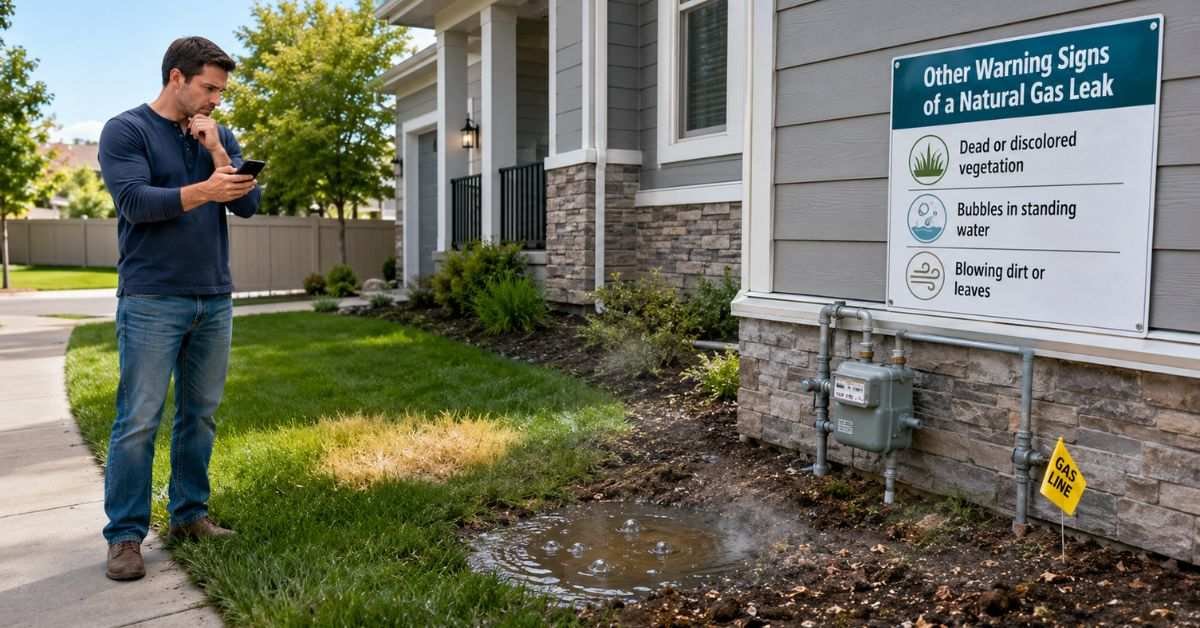
Your nose is helpful, but it should not be your only warning system. Even without a clear mercaptan smell, watch for these signs:
- Hissing, whistling, or roaring near a gas pipe, appliance, or meter.
- Dirt, leaves, or dust blowing from one small outdoor spot.
- Bubbles in puddles or standing water near underground lines.
- Dead or discolored plants above a buried gas line.
- Damaged gas piping after digging, construction, impact, or severe weather.
Please step back and inform the appropriate authorities about these signs. Do not dig, touch damaged piping, or try to repair a leak yourself. Utility safety guidance identifies unusual pipe sounds, dead vegetation, mist, and bubbling water as possible gas-emergency signs.
Why Mercaptan Smell May Not Be Noticed
Gas odor is not perfect. “Odor fade” can happen when soil, concrete, new pipes, tanks, drywall, or other materials reduce or absorb some odorant. Other scents can mask the gas odor, and some individuals may have a diminished sense of smell.
| Situation | Why the Odor May Be Weaker | Safer Approach |
| Gas travels through soil or concrete | Materials can reduce the warning odor | Report outdoor leak signs |
| New piping or equipment | Surfaces can take up odorant | Use qualified professionals |
| Cleaning or cooking odors | Strong scents can mask gas odor | Do not dismiss warning signs |
| Reduced sense of smell | A person may not detect it | Consider approved detectors |
Because the mercaptan smell may fade or be masked, never rely solely on your nose when other signs point to a leak. In particular, National Grid cautions that consumers shouldn’t rely just on smell to detect natural gas because soil and concrete might lessen odor intensity.
Everyday Gas Safety Habits
Homes, schools, landlords, and businesses can prepare before an emergency happens. To respond safely to a possible mercaptan smell concern:
- Have gas appliances serviced by qualified professionals.
- Teach everyone to leave first and call from outside.
- Call the local line-marking service before digging near buried gas lines.
- Ask a utility or qualified technician about a suitable natural gas detector.
- Keep emergency contact numbers for gas utilities easy to find outside the building.
A small amount of preparation can prevent panic and reduce dangerous choices. Only trained professionals should check or repair gas appliances and piping.
FAQs
Does natural gas naturally have a rotten-egg odor?
No. Natural gas is usually odorless; an odorant is added so leaks are easier to notice.
Can a drain smell like a gas leak?
Yes. Drains can release sulfur-like odors, but an uncertain odor near gas equipment should still be treated seriously.
Does a faint odor mean there is no danger?
No. The warning scent can fade, be masked, or be difficult for some people to detect.
Should I open the windows after noticing the mercaptan smell?
No. Leave windows and doors as they are, exit immediately, and call safely from outside.
Can I use my phone while still inside?
No. Leave first, because an electrical device may create a spark.
Conclusion
The mercaptan smell linked with natural gas is designed to alert people before a possible leak becomes more dangerous. Its unpleasant sulfur-like odor has a clear purpose: it tells you to take action rather than ignore the warning. Never look into a suspected leak on your own. A gas odor, a hissing pipe, bubbling water outdoors, or unexplained dead plants should be treated as a warning. The odor can fade or be missed, so sight and sound also matter.
Share these safety steps with the people in your home or building. If you ever notice an unexpected mercaptan smell, leave without using electrical devices, then contact your gas utility or emergency services from a safe location.