

Introduction
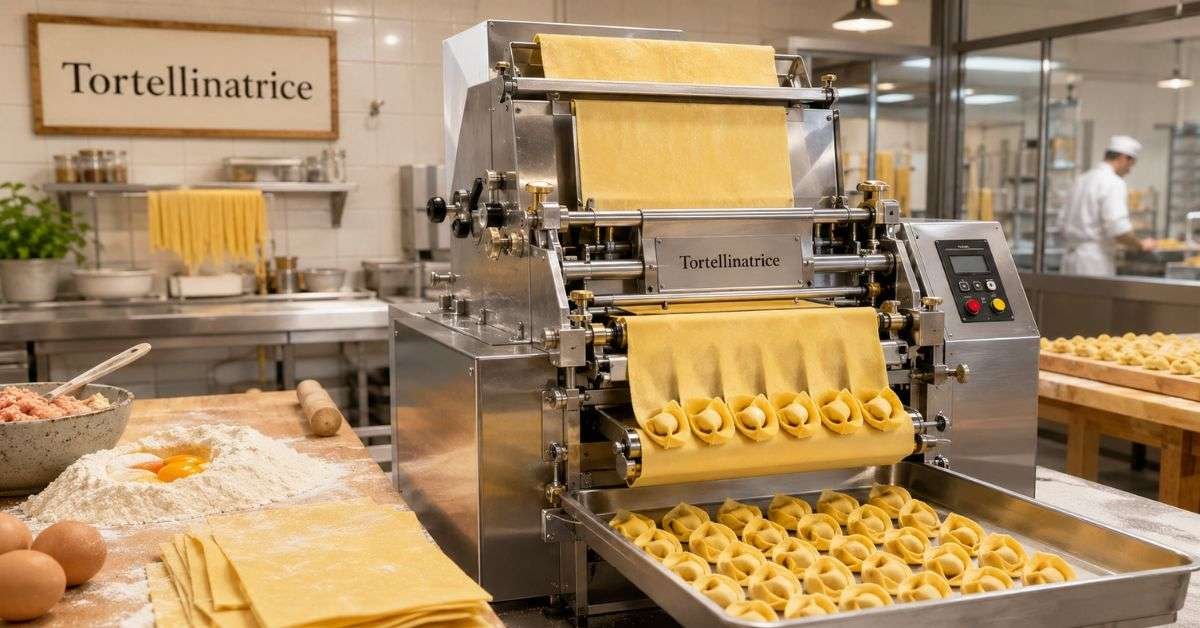
A tortellinatrice is a useful pasta machine for making tortellini faster, cleaner, and more evenly. It takes a long sheet of pasta dough, adds filling, folds the pasta into the classic tortellini shape, and seals the edges. For restaurants, pasta shops, catering kitchens, and small food factories, this machine can save many hours of hand work. It also helps every piece look similar, which matters when customers expect the same taste, size, and quality every time. In 2026, many food businesses want equipment that supports fresh food, faster service, and better hygiene. A good tortellini machine can help with all three. This guide explains what the machine does, how it works, who should use it, and what to check before buying one.
What Is a Tortellinatrice?
A machine designed to form filled pasta, particularly tortellini, is called a tortellinatrice. Instead of folding every piece by hand, the machine handles the repeated steps. It can place the filling, fold the dough, form the shape, and press the pasta closed. This does not mean the machine replaces skill. Good pasta still needs the right dough, the right filling, and careful setup.The dough may crack if it is overly dry. If the filling is too wet, it may leak. If the pasta sheet is too thick, the final product may feel heavy.
The main purpose of a tortellinatrice is to make production faster and more consistent. This is helpful when a business needs many pieces every day. A handmade look is still possible, but the machine gives better control over size, filling amount, and sealing.
Why This Machine Matters in 2026
Food businesses in 2026 are trying to balance quality and speed. Customers want fresh pasta, but they also want quick service and fair prices. Making filled pasta by hand can be slow, especially when orders increase. A tortellinatrice helps solve this problem by reducing repeated manual work. Workers can focus more on dough quality, filling flavor, cooking, packaging, and customer service. The machine handles the boring and tiring part: shaping piece after piece.
It is also useful for businesses that sell frozen or ready-to-cook pasta. When every tortellini has a similar size, it cooks more evenly. This improves the customer experience because one piece is not overcooked while another is still firm.
How the Machine Works
The process starts with a smooth sheet of pasta dough. The sheet is usually made with a pasta sheeter or rolling machine before it enters the forming machine. The filling is placed in a hopper, which feeds the correct amount into the dough. A tortellinatrice then moves the pasta sheet through its forming parts. These parts fold the dough around the filling and seal the edges. Some machines can also change molds, so the same equipment may produce different shapes like tortellini, cappelletti, or tortelloni.
The final result depends on three things: dough texture, filling consistency, and machine settings. Even a high-quality machine cannot fix a poor recipe. For best results, the dough should be elastic, the filling should be smooth, and the machine should be adjusted carefully.
Manual vs. Machine-Made Tortellini
Both handmade and machine-made tortellini can be high quality. The best choice depends on your business size, budget, and production goals. on your business size, budget, and production goals.
| Method | Best For | Main Benefit | Main Limit |
| Handmade tortellini | Small restaurants, home cooks, premium menus | Traditional feel and full control | Slow and labor-heavy |
| Semi-automatic machine | Pasta shops and medium kitchens | Faster output with some human control | Needs training and setup |
| Fully automatic machine | Food factories and large producers | High volume and consistent shape | Higher cost and more space |
If a small restaurant only serves tortellini occasionally, it may not require a large machine. But a pasta shop that sells filled pasta every day may save time and money by using a tortellinatrice.
Main Benefits for Pasta Businesses
A tortellinatrice is valuable because it supports speed, quality, and control. These benefits are important for any business that wants to grow without losing product quality.
- It helps make tortellini faster than hand folding.
- It keeps pasta size and shape more consistent.
- It can reduce wasted dough and filling.
- It lowers staff fatigue during long production days.
- It helps businesses prepare for larger orders.
These benefits are not only about making more pasta. They are also about making better daily systems. When production is easier to manage, the kitchen can plan orders, staff time, storage, and delivery more clearly.
Features to Check Before Buying
Before buying a tortellinatrice, do not look only at the price. A cheaper machine may cost more later if it is difficult to clean, difficult to repair, or not suitable for your filling. The most important feature is production capacity. Some machines are made for small batches, while others are designed for many kilograms per hour. You should choose based on your real daily demand, not only on future dreams. Also check the mold options. If you want to make different pasta shapes, make sure the machine supports them. Filling control is another key point. Proper filling control keeps each piece balanced and reduces waste.
| Feature | Why It Matters | What to Ask |
| Output capacity | Shows how much pasta it can make | Is it enough for daily orders? |
| Mold options | Allows different shapes and sizes | Can it make tortellini and other filled pasta? |
| Filling control | Keeps each piece balanced | Can the filling amount be adjusted? |
| Cleaning design | Saves time and supports hygiene | Are parts easy to remove? |
| Spare parts | Reduces downtime | Are parts easy to buy? |
| Staff training | Helps avoid mistakes | Does the supplier offer support? |
A smart buyer chooses a machine that fits the kitchen, staff, and menu.
Cleaning and Food Safety
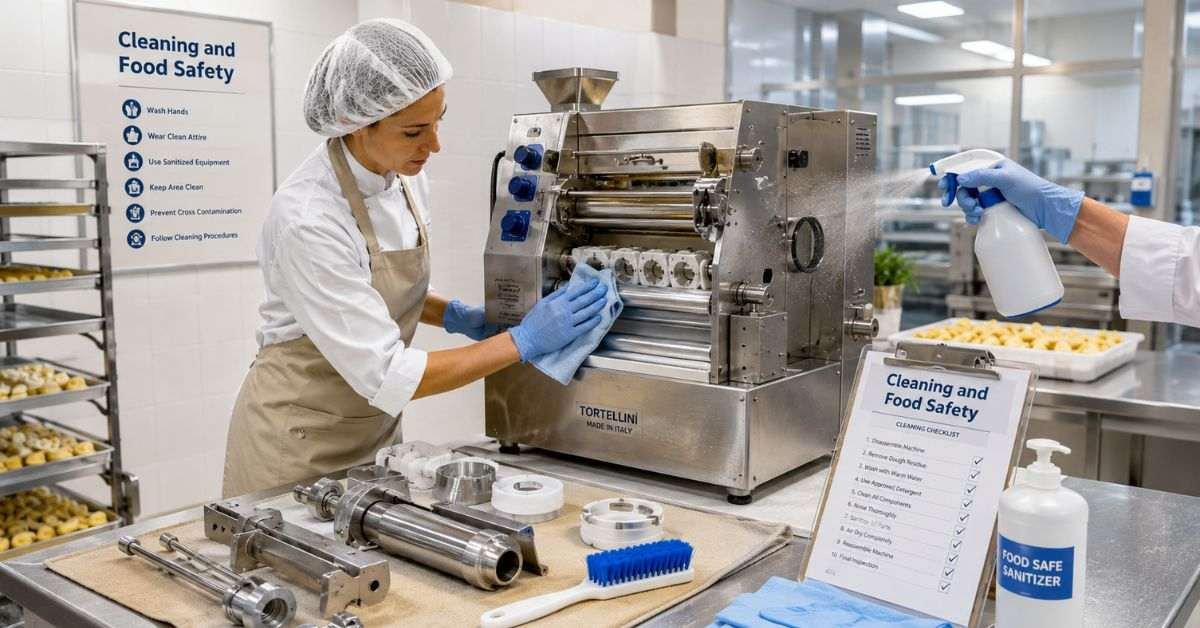
Cleaning is one of the most important parts of using a tortellinatrice. Filled pasta can include cheese, meat, vegetables, seafood, or other soft ingredients. These fillings can stick inside small areas if the machine is not cleaned properly. Good cleaning not only protects customers but also your business reputation. A machine with removable parts is usually easier to wash and inspect. Stainless steel food-contact surfaces are also advantageous because they are strong and easier to keep clean.
Staff should follow a clear cleaning routine after production. The routine should include removing leftover dough, washing food-contact parts, sanitizing surfaces, drying parts properly, and checking for trapped filling before the next use.
Common Mistakes to Avoid
Many buyers make the mistake of choosing the biggest or cheapest machine without testing it with their recipe. Such choices can create problems later. A machine that works well with one dough may not work well with another. Before buying, send your real dough and filling to the supplier for a test if possible. Watch how the machine handles the pasta sheet, how cleanly it seals the edges, and how much waste is created.
- Do not buy more capacity than your kitchen needs.
- Do not ignore cleaning time.
- Do not use watery or chunky filling without testing.
- Please keep in mind space, power, and operator training.
- Do not assume every model can make every pasta shape.
A careful test can save you from a costly mistake. It is better to check before buying than to struggle after installation.
Who Should Use This Machine?
A tortellinatrice is best for businesses that make filled pasta often. This machine is not limited to large factories. Many small and medium food businesses can use it if they have steady demand. It is useful for fresh pasta shops, Italian restaurants, hotels, catering kitchens, frozen pasta brands, meal-prep companies, and food production units. These businesses often need the same product again and again, so consistency matters.
However, this machine may not be right for everyone. If you make tortellini only for special events, hand folding may still be enough. You should carefully check the machine size if your kitchen is very small. The machine might not perform to its full potential if your team lacks time for cleaning or training.
Cost and Return on Investment
The cost of a tortellinatrice is not only the purchase price. You should also think about shipping, setup, training, extra molds, repairs, electricity, and spare parts. A machine that looks affordable at first may become costly if support is weak. To understand return on investment, ask how many labor hours the machine can save each week. Also check if it can help you accept more orders, reduce rejected pieces, and improve product quality.
For example, if workers spend many hours folding tortellini by hand, a machine may quickly reduce labor pressure. If your business wants to sell wholesale or frozen pasta, consistent shape and weight can also make packaging easier. A tortellinatrice should be considered a business tool, not just a kitchen gadget. It should help your production become more stable and profitable.
Buying Checklist for 2026
Before choosing a tortellinatrice, make a clear list of your needs. This helps you compare machines more fairly and avoid confusion.
- Daily or weekly production target
- Pasta size and shape needed
- Type of filling used
- Dough sheet thickness
- Kitchen space available
- Cleaning time and staff skill
- Warranty, service, and spare parts
Also ask the supplier for videos, manuals, and a real product test. If possible, test the machine with your recipe. This is the best way to determine whether the machine fits your business.
FAQs
What’s a tortellinatrice?
A tortellinatrice is a machine that uses sheets of pasta dough to fill, fold, shape, and seal tortellini.
A tortellinatrice should be used by whom?
Pasta shops, restaurants, catering kitchens, and other establishments that frequently produce tortellini can all benefit from it.
Is it possible for a tortellinatrice to create different pasta shapes?
With the appropriate molds, some models can create tortelloni, cappelletti, or other filled pasta shapes.
Are tortellini manufactured by machines still of excellent quality?
Yes, it can make reliable, superior tortellini if the dough, filling, and machine parameters are all set correctly.
How frequently should the machine be cleaned?
To keep the pasta fresh, safe, and hygienic, it should be cleaned after each production cycle.
Conclusion
A tortellinatrice can be a strong choice for pasta businesses that want faster production, better shape control, and more consistent filled pasta. It helps turn pasta sheets and filling into neat tortellini while reducing repeated handiwork. For restaurants, pasta shops, catering kitchens, and small food factories, the tortellinatrice can save time and improve daily workflow.
The best machine is not always the largest or most expensive. The best choice is the one that matches your recipe, space, team, cleaning routine, and order volume. Before buying, compare capacity, mold options, filling control, cleaning access, and supplier support. Most importantly, test the machine with your own dough and filling. That simple step can help you make a safer and smarter buying decision in 2026.