

Introduction
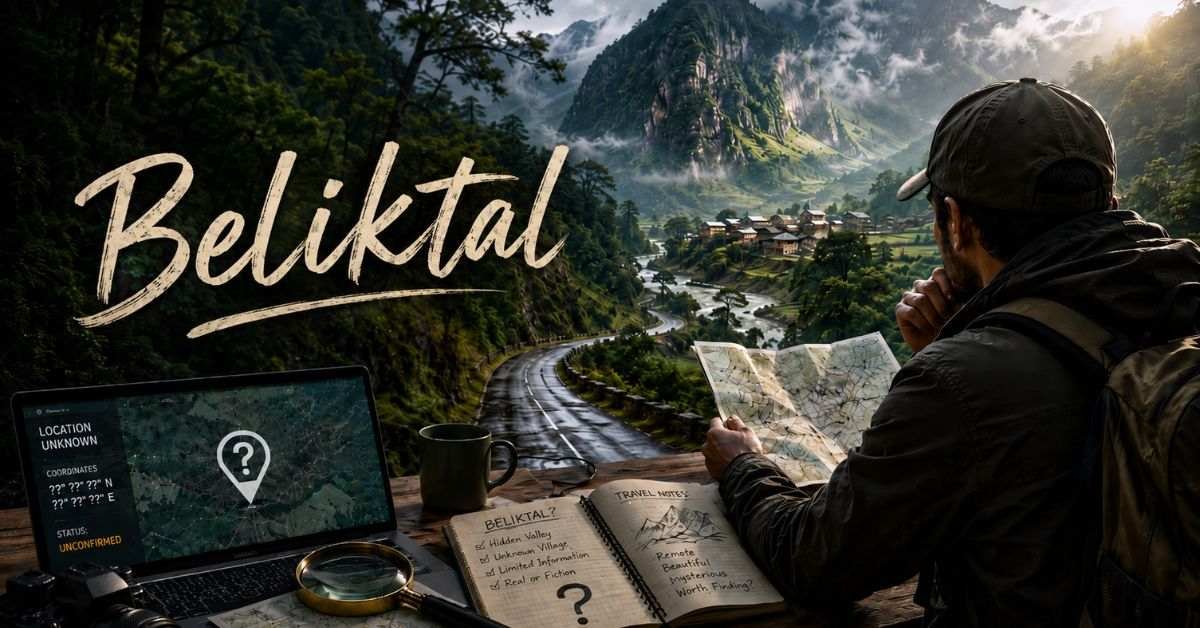
Beliktal has gained attention because it sounds like the name of a peaceful and little-known destination. Several websites describe it as a hidden valley filled with green forests, quiet villages, local food, hiking trails, and historic places. These descriptions create an attractive picture, but they also raise an important question: is this destination real, or is it simply an online story repeated across different websites?
This article examines the available information through a careful and balanced approach. It does not assume that every small village must appear on major digital maps. Some local names are difficult to find, especially when they are translated from another language. However, a genuine travel destination should normally have a country, region, map location, nearby city, transport route, or official record. At present, those important details remain unavailable. Readers should therefore treat the location as unverified until stronger evidence appears.
What Is Beliktal?
Beliktal is presented online as a quiet travel destination surrounded by natural beauty. Some articles describe mountains, lakes, traditional houses, markets, festivals, and local dishes. Other pages explain the name as a symbol of peace, balance, and simple living.
The main problem is that these descriptions are not supported by clear geographical information. Most articles do not identify a country, province, district, or nearby town. They also fail to provide reliable coordinates or official tourism records.
For this reason, the safest conclusion is that Beliktal may be a creative name, a local nickname, a spelling variation, or an invented destination. It is not currently confirmed as a recognized place that tourists can safely visit.
Why Does the Name Sound Real?
Beliktal sounds believable because its structure is similar to many real place names. Short names with strong sounds often feel geographical, especially when writers connect them with valleys, forests, mountains, and traditional communities.
Travel articles also include details that readers expect to find in a genuine destination:
- Peaceful mountain views
- Clean rivers and waterfalls
- Historic buildings and local markets
- Traditional food and cultural festivals
- Friendly residents and small guesthouses
These details help readers imagine a beautiful place. However, a realistic description is not the same as proof. A location can sound genuine even when its story has been copied, guessed, or created for entertainment.
What Important Evidence Is Missing?
A real destination usually leaves several types of evidence. It may appear on government maps, transport schedules, weather services, hotel listings, road signs, local news websites, and official tourism pages.
The following important details are still missing:
- An exact country and administrative region
- Reliable latitude and longitude coordinates
- A nearby verified town, airport, or railway station
- An official local authority or tourism website
- A traceable hotel, guide, or transport company
- Independent reports from residents or travelers
Without these details, it is not responsible to describe the location as an established tourist destination.
Online Claims Compared With Available Evidence
| Common online claim | Evidence that should exist | Current finding |
| It is a hidden valley | Country, region, and coordinates | Not confirmed |
| It has waterfalls and ruins | Maps, local records, and original photos | Not verified |
| Visitors can stay there | Hotel names, addresses, and booking records | Not available |
| It has festivals and local food | Community pages, event listings, or menus | Not confirmed |
| Certain months are best for visiting | Local weather and climate records | No verified location |
This comparison explains why Beliktal should be discussed carefully. The claims may sound appealing, but they do not yet have enough evidence to support them.
Why Do Some Websites Describe It as Real?
Many websites publish articles about unusual terms and hidden destinations because these topics attract curious readers. A rare search term may also face less competition than a popular travel keyword. Some writers may copy information from other websites without checking the original source. When several pages repeat the same description, readers may begin to believe that the information is true. Repetition can make an unsupported claim appear reliable.
Common warning signs include
- Several articles using almost identical descriptions
- No author showing first-hand travel experience
- Scenic photographs without a clear location
- Named attractions that cannot be found elsewhere
- Travel advice without maps, addresses, or routes
The topic shows several of these warning signs. This does not automatically prove that every claim is false, but it means readers should remain careful.
Could It Be a Small Local Place?
Yes, this possibility should not be completely rejected. Some villages, hills, valleys, and informal local areas are not well documented online. A place may also have different spellings when its name is changed from one alphabet to another. For example, a name may be written differently in English, Turkish, Persian, Russian, or another language. Local residents may also use a nickname that does not appear on international maps.
To prove that Beliktal is a real local place, a source should provide:
- The original name in the local language
- The country and nearest recognized town
- Accurate map coordinates
- A government or regional map
- Local news or community records
- Original photographs with location data
Until this type of evidence becomes available, the location should be described as unverified rather than completely false.
How Can Readers Check a Mystery Destination?
Readers should never depend on a single blog post when researching an unknown destination. A simple checking process can prevent confusion, financial loss, or online scams.
Use these steps
- Search the exact name inside quotation marks
- Try different spellings and local-language versions
- Check major map and geographical databases
- Ask the writer or travel seller for coordinates
- Compare the location with satellite images
- Reverse-search photographs to find their original source
- Confirm the information through two independent sources
If Beliktal is promoted through a private message or travel offer, do not send money, passport copies, banking information, or personal documents until the destination and business have been fully verified.
Verified Destination vs. Unverified Destination
| Feature | Verified destination | Unverified destination |
| Map location | Clear and consistent | Missing or unclear |
| Transport | Roads, stations, or routes listed | No reliable route |
| Accommodation | Named properties with addresses | General claims only |
| Local sources | Government or community records | Mostly unrelated blogs |
| Photographs | Independent and location-based | Stock or unknown images |
| Safety details | Official guidance available | No dependable guidance |
This table can help readers examine Beliktal and other mysterious travel locations more carefully.
Is It Safe to Plan a Trip?
It is not sensible to plan a journey until the location can be confirmed. Travel requires reliable information about transportation, accommodation, weather, healthcare, laws, local customs, and emergency services. Before booking anything, ask for a working map pin, the nearest known city, a complete accommodation address, a realistic transport route, written refund terms, and a local contact who can be checked independently.
Stop the booking process when a seller refuses to provide these basic details. Do not trust a person simply because they share attractive photographs or promise a cheap travel package. A hidden destination is never worth risking your money, documents, or personal safety.
FAQs
Is Beliktal a real place?
Beliktal is not currently confirmed as a recognized travel destination through reliable geographical evidence.
Where is the destination located?
No verified country, region, nearby city, or coordinates are publicly available.
Can tourists visit it?
There is no dependable route, accommodation record, or official travel information, so a visit should not be planned yet.
Why is it described as a hidden valley?
Some websites use this description, but they do not provide enough evidence to confirm the claim.
Could the name be misspelled?
Yes. A different local spelling is possible, but more information would be needed to investigate it.
Conclusion
Beliktal remains an interesting online mystery because it sounds like a genuine destination and is often described with detailed travel information. Readers are told about forests, waterfalls, traditional food, peaceful communities, and historic buildings. However, the most important facts are still missing. There is no confirmed country, map position, nearby city, official tourism source, reliable transport route, or verified accommodation. This does not prove that the name has never been used by a small community. It could be a regional nickname, a translation mistake, a fictional setting, or a newly created internet term.
The responsible approach is to separate possibility from proof. Readers should check major maps, local records, original photographs, and independent sources before accepting online claims. Never book a journey or send money until exact coordinates and genuine travel services have been confirmed. For now, Beliktal should be viewed as an unverified place name rather than a proven hidden destination.