

Introduction
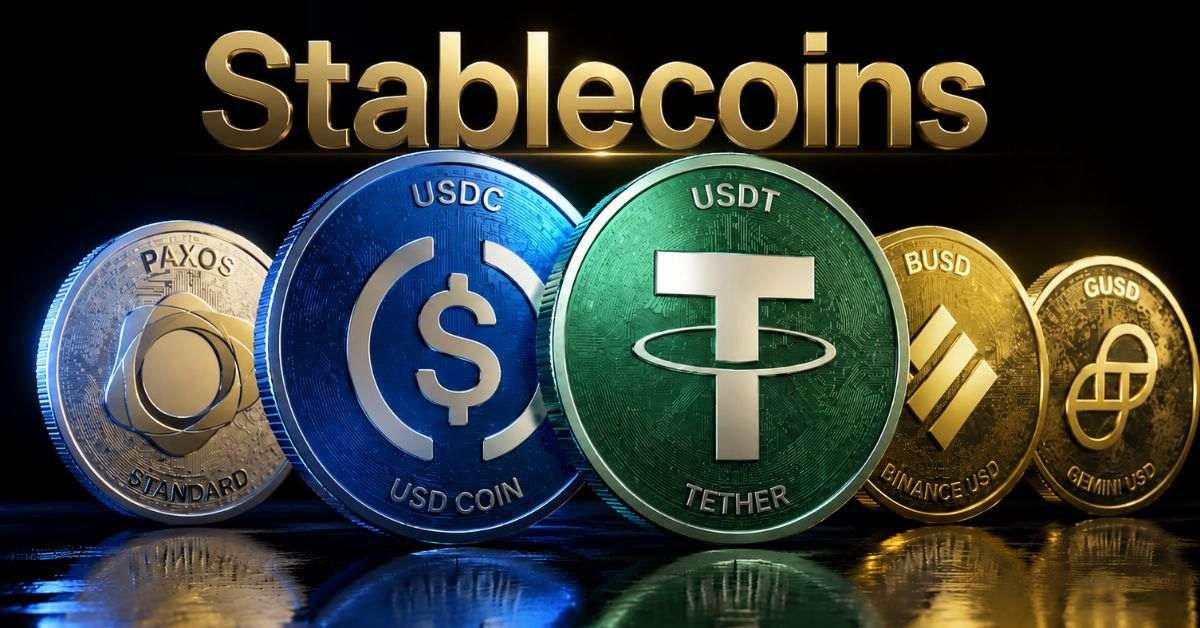
Stablecoins are one of the easiest crypto ideas for beginners to understand. They are digital coins designed to keep a steady value, usually close to one U.S. dollar. This makes them different from Bitcoin or Ethereum, which can move up and down quickly.
In 2026, many people use these dollar-linked crypto assets for trading, sending money, holding value during market swings, and moving funds between crypto platforms. Businesses also watch them because they may help with faster payments and cross-border transfers.
This guide explains how they work, why USDT and USDC are popular, what risks users should know, and how people in Singapore can buy them through Independent Reserve Singapore.
What Are Stable-Value Crypto Coins?
Stablecoins are crypto tokens made to follow the value of another asset. Most of them are linked to the U.S. dollar. For example, one USDT (Tether) or one USDC (USD Coin) is designed to stay near USD 1, which means they aim to maintain a value equivalent to one U.S. dollar. They are useful because normal crypto prices can change fast. A person may not want to hold Bitcoin during a sharp market drop. Instead, they may move into a dollar-pegged token while waiting for a better time to trade.
These assets are often used for:
- Crypto trading
- Sending digital money
- Holding dollar-like value
- Using DeFi apps
- Paying or receiving funds online
They are not exactly the same as cash in a bank account. They are crypto assets, so users still need to understand risks before buying, such as market volatility and potential regulatory changes that could affect their value.
How Do They Keep Their Price?
Most digital dollar coins keep their value by using reserves. This means the company behind the token should hold real assets, such as cash, Treasury bills, or similar safe financial instruments.
The simple idea is
- A user gives money to the issuer.
- The issuer creates tokens.
- The token moves on a blockchain.
- When users redeem tokens, the issuer gives them back money and removes them from supply.
In 2026, Reuters reported that Tether’s USDT reserves include large holdings of U.S. Treasury bills and gold, showing how major issuers use different reserve assets to support their tokens.
Main Types of Digital Dollar Tokens
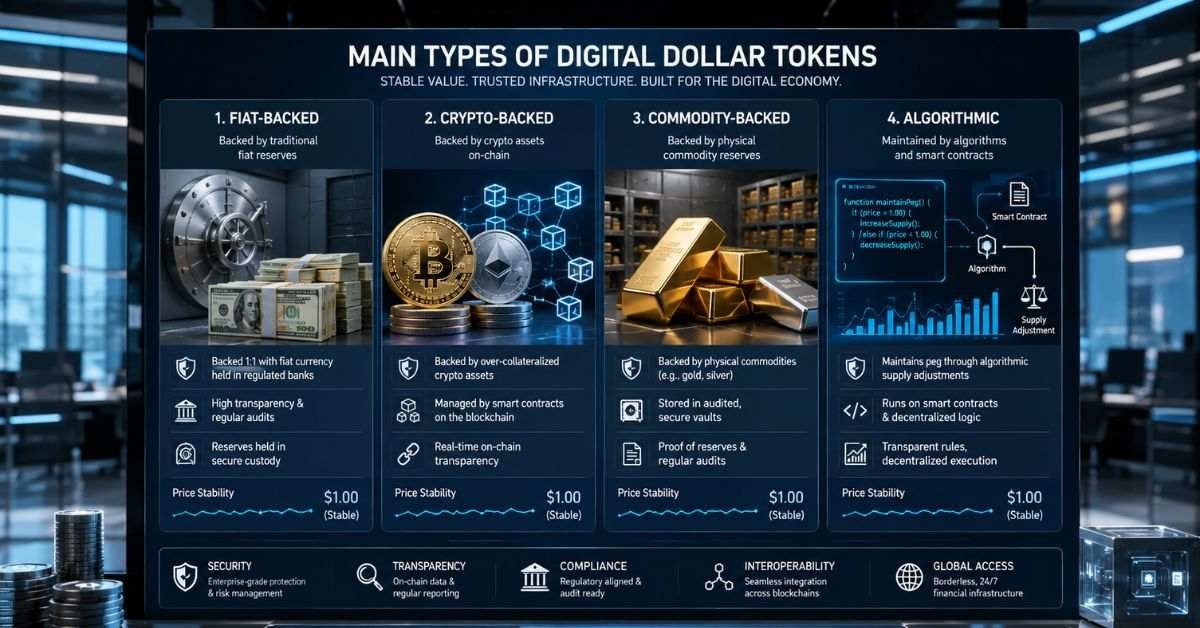
Not all pegged crypto assets work in the same way. Some are easier to understand, while others are more complex.
| Type | How Stablecoins Works | Example | Main Risk |
| Fiat-backed | Backed by cash or similar assets | USDT, USDC | Issuer and reserve risk |
| Crypto-backed | Backed by other crypto | DAI | Collateral value can fall |
| Commodity-backed | Linked to gold or other assets | XAUT | Gold price and custody risk |
| Algorithmic | Uses code and supply changes | Experimental coins | Higher depeg risk |
For beginners, fiat-backed tokens are usually easier to understand because they try to follow real-world money more directly.
USDT vs. USDC Comparison
USDT and USDC are the two most recognized names in this category. Both aim to follow the U.S. dollar, but people often use them for slightly different reasons.
| Feature | USDT | USDC |
| Issuer | Tether | Circle |
| Main strength | High trading liquidity | Strong compliance image |
| Common use | Active crypto trading | Payments, DeFi, business use |
| Value target | Around USD 1 | Around USD 1 |
| Best for | Traders who need deep markets | Users who prefer transparency |
Reuters reported in April 2026 that USDT had nearly $190 billion in circulation, showing its large role in the crypto market.
Why People Use Them in 2026
People use dollar-pegged crypto assets because they make crypto easier to manage. They act like a bridge between traditional money and blockchain systems.
Common reasons include
- Trading: Traders can move out of risky assets without returning to a bank account.
- Fast transfers: Blockchain transfers may be faster than some traditional international payments, allowing for quicker access to funds and improved cash flow for businesses and individuals alike.
- DeFi use: Users can lend, borrow, or provide liquidity in decentralized finance apps.
- Business payments: Some companies use digital dollars for settlement or treasury management.
- Market protection: During price drops, users may hold a token that aims to stay near USD 1.
This does not mean the asset is risk-free. Stablecoins only means the price target is more stable than many other crypto coins.
Main Risks You Should Know
Stablecoins can still lose value or face problems. Beginners should never think they are 100% safe.
Important risks include
- Depeg risk: The token may fall below its target value.
- Reserve risk: The issuer may not hold enough high-quality assets.
- Exchange risk: A trading platform may face security or liquidity issues, which could lead to significant financial losses for users if the platform becomes insolvent or is hacked.
- Network risk: Sending tokens on the wrong blockchain can cause permanent loss.
- Regulatory risk: Crypto rules can change in different countries, leading to uncertainty for investors and businesses operating in multiple jurisdictions.
Reuters reported that the Bank for International Settlements called global cooperation on these assets “critically important” because uneven rules may create risks across markets.
Singapore Rules and Safety
Singapore has a more organized crypto market than many countries. This matters because users should choose platforms that follow local rules. The Monetary Authority of Singapore directory lists Independent Reserve SG Pte. Ltd. for Digital Payment Token Service activity. Independent Reserve also says it holds a major payment institution license for digital payment token services under the Payment Services Act 2019.
This does not remove all risk. Crypto values, fees, network costs, and platform rules can still change. But using a known and regulated platform is usually safer than using an unknown website with no clear company details.
Suggested internal links
- Beginner’s Guide to Crypto Safety
- How to Pick a Singaporean Crypto Exchange
- How Does DeFi Operate and What Is It?
How to Buy on Independent Reserve Singapore
Independent Reserve Singapore supports crypto buying for users who want access to major digital assets. For Singapore users, the process is usually simple.
Basic steps
- Create an account on Independent Reserve Singapore.
- Complete identity verification.
- Deposit money using a supported payment method.
- Search for USDT or USDC.
- Enter the amount you want to buy.
- Review fees and confirm the trade.
- Store the asset safely.
Independent Reserve says it is licensed by MAS to provide digital payment token services in Singapore.
Before buying, check the latest fees, supported networks, deposit options, and withdrawal rules directly on the platform.
Beginner Safety Checklist
Before buying any dollar-linked crypto token, follow this simple checklist.
- Use a trusted and regulated platform.
- Check the token symbol carefully.
- Learn the difference between USDT and USDC.
- Review trading fees and withdrawal charges.
- Turn on two-factor authentication.
- Do not share passwords or one-time codes.
- Please consider sending a small test amount before proceeding with a larger transfer.
- Make sure you choose the correct blockchain network.
- Keep records of your trades for tax or reporting needs.
This small checklist can help beginners avoid costly mistakes.
Best Use Cases in Simple Words
These crypto assets are useful when you want speed, flexibility, and a price close to the dollar.
Good use cases include:
- Holding value during market volatility
- Moving funds between exchanges
- Sending money to another crypto wallet
- Using blockchain payment tools
- Managing short-term crypto trading funds
They may not be the best choice if you do not understand wallets, networks, or exchange security. Beginners should start modest and work their way up.
FAQs
Are stablecoins safe?
They are usually less volatile than Bitcoin, but they still have issuer, exchange, and regulation risks, which can affect their stability and reliability as a form of digital currency.
What distinguishes USDT from USDC?
USDT is known for deep trading liquidity, while USDC is often linked with transparency and compliance.
Can I buy USDC in Singapore?
Yes, Singapore users can buy USDC through supported crypto platforms such as Independent Reserve.
Can these coins lose their peg?
Yes. During stress, low liquidity, or issuer concerns, the price can move away from USD 1.
Do I need a crypto wallet?
Not always. You can keep assets on an exchange, but a wallet gives more personal control if used safely.
Conclusion
Stablecoins are important in 2026 because they make crypto easier to use. They help traders move between assets, allow faster digital transfers, and give users a way to hold dollar-like value on blockchain networks. Still, they are not risk-free. Users should understand reserve backing, issuer trust, platform safety, fees, and network choices before buying. USDT and USDC are the most popular options, but each has different strengths.
For Singapore users, Independent Reserve offers a regulated way to access major crypto assets. Before transferring more money, start small, verify all fees, employ robust security, and do a test transfer.